
Summary
Most people wait longer than they need to before talking to an advisor. Usually it comes down to a feeling that they haven’t earned the conversation yet, that there isn’t enough in the accounts to justify someone else’s time. That’s rarely the real test. The better question is whether your money has started to feel complicated, and whether you’re still confident in the decisions you’re making with it.
Nobody wakes up one morning and decides they have officially become the kind of person who needs a financial advisor.
It creeps up. A raise here, a new account there, a mortgage, a kid, a parent who needs help. One year you’re tracking everything in your head and it works fine. A few years later you’re not entirely sure where it all sits, and the decisions have gotten heavier.
Here are nine signs that you’ve probably crossed that line.

Your Finances Are Getting More Complicated as Your Income Grows
Earning less makes planning simple, in a way. Save what you can. Pay down debt. Try not to spend more than you make.
Then the income goes up and the options multiply. RRSP room you’ve never used. A TFSA you’ve been treating like a savings account. Non‑registered money. A workplace plan with matching you may or may not be maximizing. Maybe a bonus that lands in March and puts you in a different tax position than you expected.
None of those decisions is complicated on its own. The trouble is that they interact, and most people handle them one at a time, in whatever order they happen to come up.
That’s usually where the gaps show.
You’re Not Sure Your Investments Match Your Goals
Ask someone why they own what they own and you will often get a pause.
Sometimes the honest answer is that a bank rep recommended it years ago and nobody has revisited it since. Sometimes the portfolio was built around a goal that no longer exists.
Neither is a disaster. But if you can’t explain what a holding is supposed to do for you, it’s hard to know whether it’s doing it.
Planning generally runs the other direction. Goal first, timeline second, investments last.
A Major Life Change Has Shifted Your Priorities
Marriage. A baby. A divorce. A move. A parent who suddenly needs a lot more support than they did last spring.
Life events rearrange financial priorities quickly, and they almost always outpace the paperwork. Beneficiary designations get missed. Coverage that suited one household doesn’t fit the next one.
This is usually where an old plan quietly stops working, long before anyone notices.
You Have Questions About Retirement, Tax or Estate Planning
These three overlap far more than people expect.
When and how you draw retirement income affects the tax you pay. The order you draw from RRSPs, TFSAs and non‑registered accounts matters. So does when you start CPP and OAS. So does the fact that an RRSP generally has to be converted by the end of the year you turn 71.
Pull one thread and the others move.
If you have questions in any of these areas, looking at them together tends to be more useful than solving them one at a time.

You Want Long-Term Clarity, Not Just a Good Year
Some people arrive with a specific problem to solve. Others just want someone to tell them whether they’re okay.
That second one is a perfectly good reason to book a meeting.
Knowing roughly where you stand, what your plan assumes about returns and inflation, and what would have to change if something went sideways, that’s worth considerably more than a strong twelve months.
You Own a Business or Have Incorporated
Business owners deal with questions most employees never touch.
Salary or dividends. How much to leave in the corporation. What retirement looks like when there’s no pension and no employer match. Whether the business is part of the plan or a risk to it.
Personal and corporate finances are usually tangled together more than the owner realizes, especially in the early years.
This tends to be one of the areas where coordinated advice makes the biggest difference, provided your advisor and your accountant are actually talking to each other.

You’ve Received an Inheritance or a Large Sum of Money
An inheritance. A severance package. The sale of a house or a business. A bonus larger than anything you’ve seen before.
These tend to arrive at the worst possible moment emotionally, which is exactly when people make decisions they’d like to take back.
There’s almost never a reason to decide everything in the first week. Parking the money somewhere safe while you think is a legitimate choice, not a failure to act.
You’re Managing Everything Yourself and It Feels Like Guesswork
Plenty of people manage their own money well, and some genuinely enjoy it. No argument there.
But managing investments and having a plan aren’t the same thing.
The tell is usually emotional rather than technical. Second‑guessing a decision for weeks. Checking the account after a bad headline. Putting off a rebalance because you’re not sure what the right call is.
That kind of uncertainty carries a cost, even in years when the returns look fine.
Getting advice doesn’t have to mean handing over the keys, either. For a lot of people it just means having someone to think out loud with before they do something.
Your Accounts Are Spread Across Several Institutions
An old group plan from a job you left years ago. An RRSP at the bank your parents used. A TFSA opened online because the rate looked good that month. Maybe a locked‑in account nobody has opened in a decade.
It’s easy to end up here without ever making a bad decision.
The problem is that scattered accounts hide your real asset mix. Three different‑looking funds at three institutions can hold a lot of the same companies, and you’d never know it from any one statement.
Nobody can give you advice on a picture they can’t see.
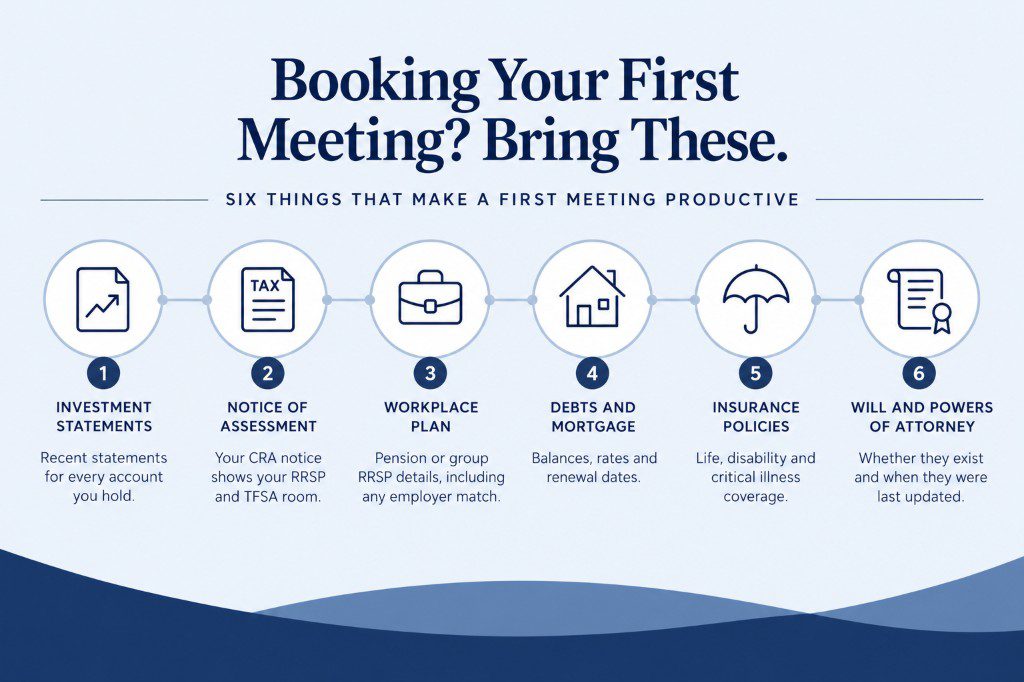
So When Is the Right Time?
If a few of these sounded familiar, you’re further along than you think.
There’s no threshold you have to clear first. No minimum balance, no tidy set of accounts, no moment where you finally feel organized enough to book the appointment. Most people come in somewhere in the middle of a mess, and that’s normal.
Working with an advisor isn’t about giving up control. It’s having someone look at the whole picture with you, ask the questions you haven’t thought to ask, and keep the plan honest as your life keeps changing.
If you recognized yourself in a few of the nine above, that’s usually the sign.
Frequently Asked Questions
When should you hire a financial advisor?
There’s no single right moment. For most people it’s when their finances start to feel more complicated than they used to, a growing income, a major life change, an inheritance, a business, or simply wanting to know whether they’re actually on track. If you find yourself putting off decisions because you’re unsure, that’s usually reason enough to have the conversation.
How much money do you need before working with a financial advisor?
Less than most people assume. If you own a home, have savings or investments, carry debt, or have people who depend on you, there are decisions worth talking through. Minimums do vary between advisors and firms, so it’s fair to ask about that in the first conversation.
What does a financial advisor actually do?
The starting point is usually your goals, not your portfolio. From there an advisor looks at how your savings, investments, insurance and other assets support those goals, which can include retirement planning, investment recommendations, and tax and estate considerations. The other half of the job is reviewing the plan as your circumstances change.
Is it worth paying for a financial advisor?
It depends on what you’re looking for. Some people value the investment strategy, others value having a coordinated plan, a second opinion before a major decision, or simply more confidence in the choices they’re making. Whatever the reason, ask any advisor to explain clearly how they’re compensated before you commit to anything.
How do I choose a financial advisor in Calgary?
Look at credentials, the range of services offered, and how the advisor is paid. It also helps to ask how often you’d meet, who you’d actually deal with day to day, and whether they regularly work with people in situations like yours. An initial conversation usually tells you a lot about whether it’s a fit.
Can a financial advisor help with tax and estate planning?
An advisor can help you consider how tax and estate matters fit into your broader plan, and will often work alongside your accountant and a qualified legal professional. Tax filing itself, and legal documents such as wills and powers of attorney, are generally handled by those professionals rather than by the advisor.